

Cheapest Country to Visit in Europe: 10 Budget Picks for 2026
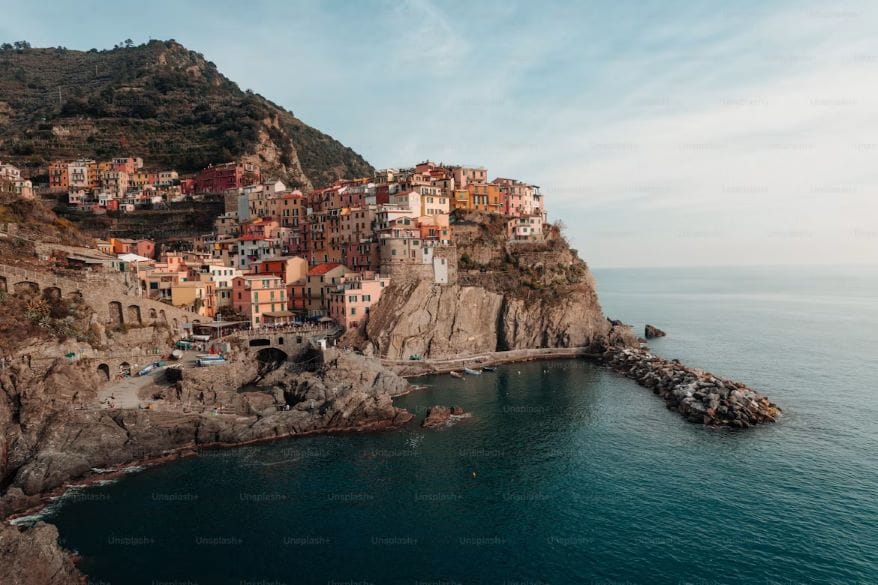
Europe does not have to mean €200 hotel rooms, overpriced restaurants, and a travel budget disappearing within a few days.
Look beyond Europe's most famous tourist capitals and you can still find historic cities, Adriatic beaches, mountain villages, medieval fortresses, excellent local food, and comfortable accommodation at prices considerably below those of Western Europe's biggest destinations.
For travelers searching for the cheapest country to visit in Europe, however, there is no single winner for everyone.
A backpacker traveling by bus and staying in hostels has different costs from a couple booking private rooms. A family may save money in a country with inexpensive apartments and restaurants but spend more getting there. Luxury travelers may care less about finding the absolute lowest daily cost and more about where €150 buys an experience that might cost €400 elsewhere.
For 2026, North Macedonia, Albania, Bosnia and Herzegovina, Bulgaria, Serbia, and Romania remain among the strongest destinations to investigate for low-cost European travel. Poland, Hungary, Montenegro, and parts of Portugal can also offer excellent value when you choose the right destinations and travel dates.
As a rough planning benchmark, an independent budget traveler in the cheapest parts of Europe may be able to travel on approximately €30–€60 per person per day before international flights, while couples and families choosing private accommodation should budget more.
These are planning estimates, not guaranteed prices. Summer demand, major events, coastal location, exchange rates, and how early you book can change the real cost dramatically.
This guide compares 10 affordable European countries based not only on headline prices, but on what actually affects your trip: accommodation, meals, transportation, seasonality, accessibility, attractions, and overall value.
Quick Comparison: Cheapest European Countries to Visit in 2026
| Country | Approx. Budget Travel Cost* | Best For | Best Value Period |
|---|---|---|---|
| North Macedonia | €30–€50/day | Couples, lakes, culture | Apr–Jun, Sep–Oct |
| Albania | €35–€60/day | Beaches, road trips, couples | Apr–Jun, Sep–Oct |
| Bosnia & Herzegovina | €35–€60/day | History, food, scenery | Apr–Jun, Sep–Oct |
| Bulgaria | €35–€65/day | Families, cities, beaches | May–Jun, Sep |
| Serbia | €35–€65/day | Cities, nightlife, food | Apr–Jun, Sep–Oct |
| Romania | €40–€70/day | Families, castles, road trips | Apr–Jun, Sep–Oct |
| Poland | €45–€75/day | City breaks, history | Mar–May, Sep–Nov |
| Hungary | €45–€80/day | Couples, architecture, spas | Mar–May, Sep–Nov |
| Montenegro | €45–€85/day | Coast, mountains, couples | May–Jun, Sep |
| Portugal | €55–€90/day | Families, coast, first-timers | Mar–May, Oct–Nov |
*Indicative per-person daily planning ranges for relatively budget-conscious travel, generally covering basic accommodation, local meals, public transportation, and modest sightseeing. International flights, visas, travel insurance, nightlife, car rental, and premium activities are excluded. Couples sharing rooms can often reduce the per-person accommodation cost.
One important distinction: the cheapest country on the ground is not necessarily the cheapest trip overall.
Before choosing your destination, compare flight prices to Europe from your departure city, as airfare can significantly affect which country offers the best overall value.
A €35-per-day destination requiring an expensive multi-stop flight and private airport transfer could cost more for a five-day holiday than a €60-per-day destination served by a cheap direct flight.
Always compare the total trip cost, not just the price of coffee or hotel rooms.
1. North Macedonia: One of Europe's Best Low-Cost All-Rounders
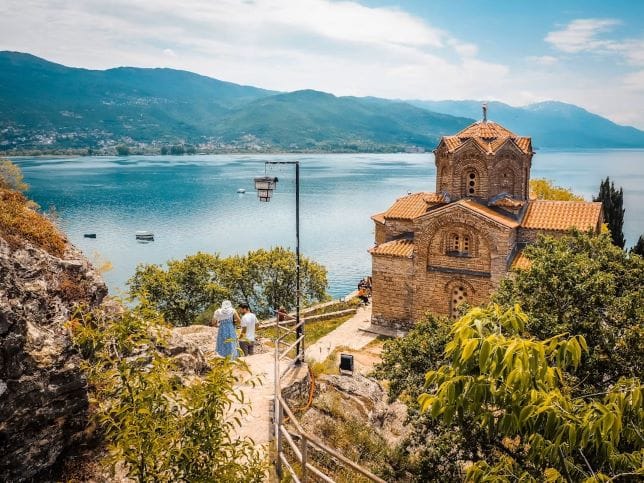
If your priority is stretching a modest budget without sacrificing scenery or cultural experiences, North Macedonia deserves serious consideration.
The country combines Ottoman-era architecture, Orthodox monasteries, mountains, traditional food, and one of Europe's most attractive lake destinations without the price levels associated with many Mediterranean tourism hotspots.
Where to Go
Skopje is the practical entry point for most visitors. Explore the Old Bazaar, Stone Bridge, Kale Fortress area, museums, cafés, and nearby Matka Canyon.
For many travelers, however, Ohrid is the highlight.
The wider Lake Ohrid region is recognized by UNESCO for both its natural and cultural heritage.
Set beside Lake Ohrid, the city combines historic churches, cobbled streets, lake views, swimming spots, restaurants, and boat excursions. It works particularly well for couples who want a scenic European getaway without paying resort prices associated with better-known lakeside destinations.
What Does North Macedonia Cost?
Budget-conscious travelers should investigate a planning range of roughly €30–€50 per person per day, excluding international transportation.
Your biggest variables will be accommodation standard, restaurant choice, and whether you rely on buses or arrange private transportation.
Local bakeries, casual restaurants, and traditional dishes can help keep food spending manageable. Intercity buses are generally more useful to travelers than relying on an extensive rail network.
Best Time for Value
Late spring and early autumn provide an attractive balance between weather and prices.
July and August bring more visitors to Ohrid, so accommodation near the lake can become considerably more expensive than low-season averages suggest.
Best for: Couples, backpackers, slow travelers and travelers interested in lakes and culture.
Money-saving strategy: Spend several nights in Ohrid rather than treating it as a rushed day trip. Slower travel reduces repeated transportation costs and gives you more time to explore on foot.
2. Albania: Best for Affordable Beaches and Scenic Road Trips
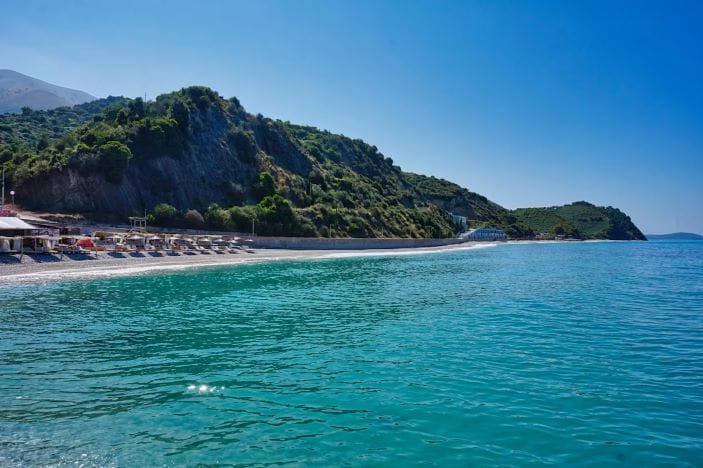
Albania has moved rapidly from an under-the-radar destination to one of Europe's most talked-about summer countries.
The attraction is easy to understand.
You can combine Adriatic and Ionian beaches with Ottoman towns, mountain landscapes, archaeological sites, lively Tirana, and a distinctive food culture in a relatively compact country.
Albania can still be one of the cheapest countries to visit in Europe, but there is an important qualification for 2026: its most famous coastal destinations are no longer uniformly cheap during peak summer.
Where to Go
Start with Tirana for cafés, museums, restaurants, nightlife, and contemporary Albanian culture.
Then consider:
- Explore the UNESCO-listed historic centres of Berat and Gjirokastër for Ottoman-era architecture, castles, stone houses, and centuries of cultural history.
- Shkodër as a gateway toward the Albanian Alps.
- Himarë for a more relaxed coastal base.
- Sarandë for beaches, nightlife, and access to Butrint.
- Theth for mountain scenery and hiking.
How Much Should You Budget?
A budget traveler might plan around €35–€60 per person per day, although the Albanian Riviera can cost significantly more in July and August.
Couples sharing guesthouses or apartments may achieve excellent value, particularly outside the most popular coastal weeks.
The real opportunity is shoulder-season Albania.
Visit in May, June, September, or early October and you may find a much better combination of pleasant weather, accommodation availability, and lower crowd levels.
Transportation Reality
Albania's transportation network requires more planning than those of countries with extensive rail systems.
Buses and minibuses connect many cities, but schedules and departure arrangements may not always feel as standardized as in Western Europe.
A rental car can make remote beaches and mountain areas easier to reach, but it adds fuel, parking, insurance, and rental costs. Road conditions and driving styles also vary.
Cheapest European Country to Visit for Couples?
Albania is one of the strongest candidates.
A couple can combine a boutique guesthouse in Berat, seaside days around Himarë, traditional dinners, and mountain scenery for considerably less than a comparable itinerary in some better-known Mediterranean destinations.
Best for: Couples, beach travelers, road trips and adventure travelers.
Money-saving strategy: Avoid automatically booking Sarandë or Ksamil in August. Compare Himarë and other coastal bases, and consider June or September.
3. Bosnia and Herzegovina: Outstanding Value for History, Food and Scenery
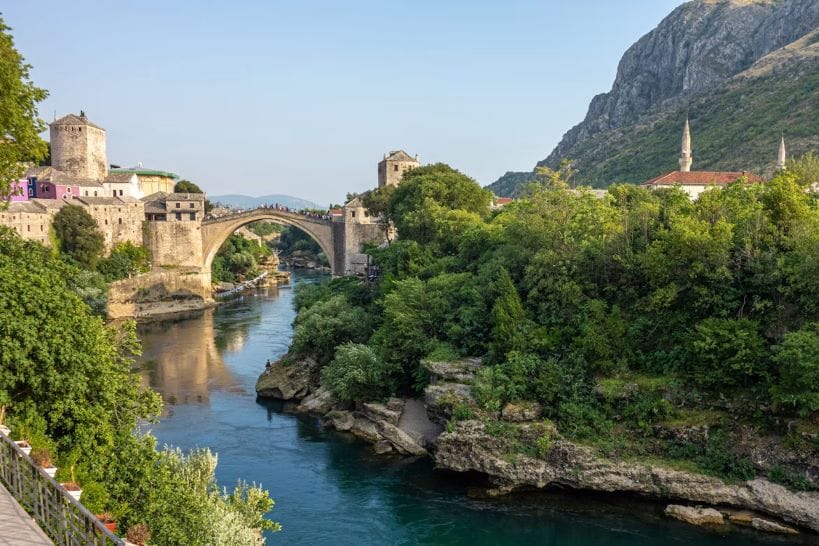
Bosnia and Herzegovina offers one of Europe's strongest combinations of affordability and cultural depth.
This is not simply a destination to choose because it is inexpensive.
Its Ottoman, Austro-Hungarian, Yugoslav, and modern history has produced cities and landscapes unlike anywhere else in Europe.
Sarajevo
Sarajevo deserves at least two or three days.
Walk through Baščaršija, explore the city's religious and architectural diversity, learn about the siege of Sarajevo, try Bosnian coffee, and eat dishes such as ćevapi and burek.
Many central attractions are accessible on foot, helping reduce daily transportation costs.
Mostar and Beyond
Mostar is famous for Stari Most, the reconstructed Ottoman bridge spanning the Neretva River.
Many visitors see Mostar on a quick excursion, but staying overnight allows you to experience the old town before and after the busiest day-trip periods.
Other worthwhile stops include Blagaj, Počitelj, Jajce and the country's mountain landscapes.
Typical Budget
A practical budget-travel planning range is around €35–€60 per person per day.
Locally owned guesthouses, bakeries, traditional restaurants, and buses can keep costs reasonable.
Private transfers and organized tours increase convenience but can quickly push your spending above backpacker-level budgets.
Best for: History enthusiasts, couples, photographers, food-focused travelers and culturally curious visitors.
Money-saving strategy: Combine Sarajevo and Mostar by public transportation instead of taking multiple private excursions.
4. Bulgaria: Excellent for Families, Beaches and City Breaks
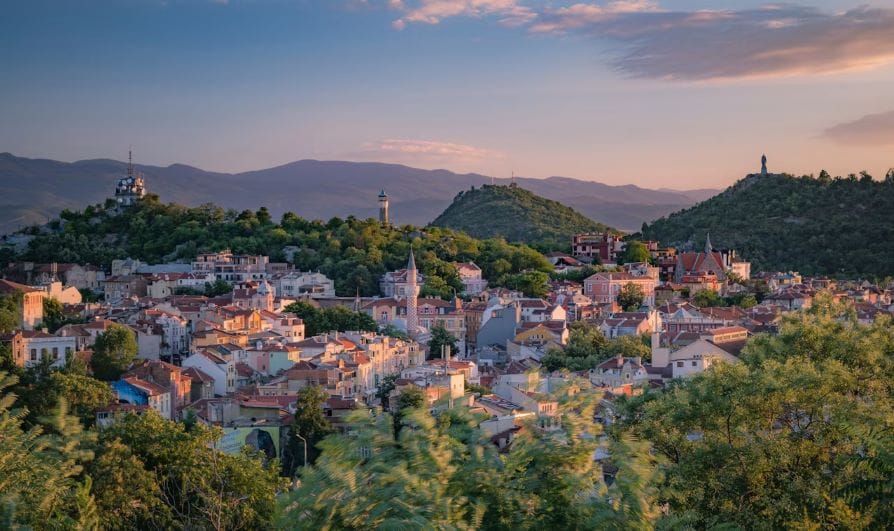
Bulgaria is unusual because it can deliver several completely different European holidays within one relatively affordable country.
You can spend a weekend exploring Sofia, hike in the mountains, visit historic monasteries, wander through Plovdiv's old town, or take a family beach holiday on the Black Sea.
Bulgaria is also fully part of the Schengen Area, which matters when planning a multi-country European itinerary.
Sofia and Plovdiv
Sofia combines Roman remains, Orthodox churches, museums, parks, and easy access to nearby mountains.
Plovdiv, one of Europe's oldest continuously inhabited cities, offers Roman heritage, colorful historic houses, creative districts, and a more relaxed atmosphere.
Black Sea Coast
The Black Sea coast can provide strong value for families, especially when compared with some Mediterranean resort regions.
Sunny Beach is known for large-scale tourism and nightlife, while Nessebar adds historic character. Other coastal areas may suit travelers looking for quieter stays.
However, coastal prices rise during peak summer.
Budget
A reasonable budget-travel planning range is approximately €35–€65 per person per day, depending heavily on location and season.
Families can often save by booking apartments with kitchens, especially for longer stays.
A 2026 Currency Change Travelers Should Know
Bulgaria adopted the euro on January 1, 2026. Travelers using older guides may still see prices and budgeting advice based on the Bulgarian lev, so verify current prices rather than relying on outdated travel content.
Bulgaria and Romania have also been fully integrated into the Schengen Area since January 1, 2025.
Best for: Families, beach holidays, ski trips, city breaks and first-time Eastern European travelers.
Money-saving strategy: Compare package pricing with independent bookings for Black Sea holidays. Depending on your departure city and travel dates, a package can occasionally cost less than assembling flights, transfers, and accommodation separately.
5. Serbia: Best for Affordable City Life, Food and Nightlife
Serbia is particularly attractive to travelers who prefer energetic cities, café culture, nightlife, food, and history over classic resort tourism.
Belgrade is the obvious starting point.
Belgrade
The Serbian capital sits at the meeting point of the Danube and Sava rivers.
Kalemegdan Fortress offers history and expansive views without requiring an expensive sightseeing day. Neighborhoods such as Zemun provide a different atmosphere from central Belgrade, while cafés, restaurants, markets, and nightlife can fill several days.
Novi Sad
Novi Sad offers a slower alternative.
Its pedestrian center, Petrovaradin Fortress, riverfront, and café culture make it an easy addition to a Serbian itinerary.
Budget Expectations
Plan approximately €35–€65 per person per day for budget-conscious travel, depending on accommodation and nightlife.
Belgrade can be more expensive than smaller Serbian cities, particularly during events and busy weekends.
Serbia uses the Serbian dinar and is not part of the EU or Schengen Area. That distinction matters when building a multi-country itinerary.
Best for: Solo travelers, younger couples, nightlife, food and city breaks.
Money-saving strategy: Use local bakeries and casual restaurants for breakfast and lunch, then allocate more of your budget to one good evening meal.
6. Romania: Best Affordable Country for Castles and Road Trips
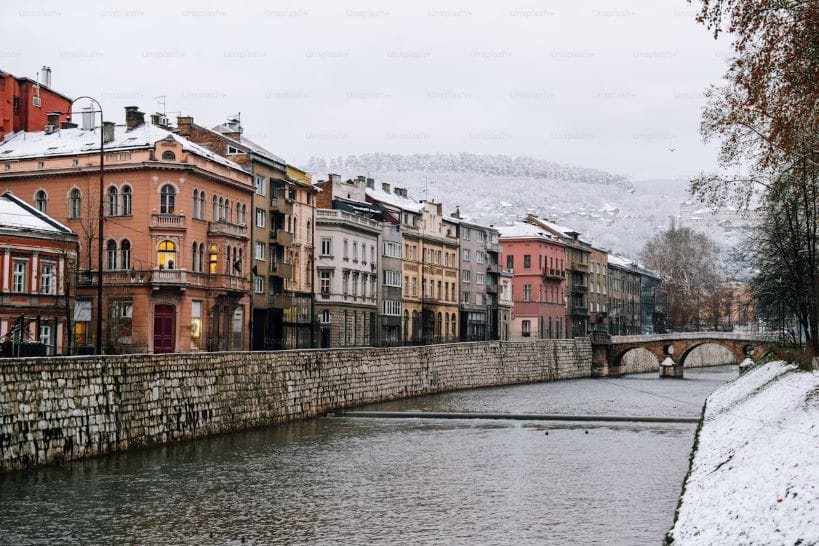
Romania offers exceptional variety for its price.
Bucharest provides the big-city experience, Transylvania delivers medieval towns and castles, while the Carpathians offer hiking and mountain landscapes.
For families and travelers who want a longer itinerary rather than a single-city break, Romania can offer particularly good value.
Essential Destinations
Bucharest: Museums, Belle Époque architecture, parks, restaurants, and nightlife.
Brașov: A beautiful historic base surrounded by Transylvanian scenery.
Sibiu: Attractive squares, historic architecture, and a walkable center.
Sighișoara: A compact medieval citadel ideal for history-focused travelers.
Bran: Famous for Bran Castle and its association with the Dracula tourism story, although the historical connection between Dracula mythology and Vlad the Impaler is often oversimplified.
Daily Budget
Approximately €40–€70 per person per day is a reasonable starting range for budget planning.
Train travel can be economical, although journey times may be longer than the distance on a map suggests.
Families may find apartments particularly useful because they provide more space and the option to prepare some meals.
Schengen Status
Romania became fully part of the Schengen Area on January 1, 2025.
Romania remains an EU member that uses the Romanian leu, not the euro.
Best for: Families, road trips, castle lovers, history travelers and hikers.
Money-saving strategy: Do not base your entire trip in Bucharest and pay for repeated long day tours. Staying in Brașov or another Transylvanian city can reduce unnecessary backtracking.
7. Poland: Affordable, Easy to Navigate and Rich in History
Poland may not always be the absolute cheapest destination on a European backpacking list, but it performs extremely well on value.
Infrastructure is strong, intercity transportation is useful, cities offer substantial cultural attractions, and travelers have a wide choice of accommodation.
Where to Visit
Kraków is the classic choice for a first visit, with its Old Town, Wawel Castle area, Kazimierz district, and extensive cultural attractions.
Warsaw offers a different experience: reconstructed historic areas, museums, modern architecture, and insight into Poland's turbulent 20th-century history.
Gdańsk combines maritime heritage, distinctive architecture, and easy access to Poland's Baltic coast.
Wrocław is another strong option for architecture, riverside walks, and a lively student atmosphere.
Budget
Budget travelers should consider approximately €45–€75 per person per day.
Kraków's most tourist-heavy central streets can cost considerably more than neighborhood restaurants a short walk away.
Poland uses the Polish złoty, not the euro.
Why Poland Works for Families
Reliable transportation and a broad accommodation market make logistics relatively straightforward.
Families can combine interactive museums, castles, historic centers, parks, and nature without requiring expensive guided activities every day.
Best for: Families, history enthusiasts, city-break travelers and first-time visitors to Central Europe.
Money-saving strategy: Compare rail fares in advance and avoid eating every meal directly on the main tourist squares.
8. Hungary: Affordable If You Look Beyond Tourist-Center Budapest
Hungary is often treated as synonymous with Budapest.
Budapest is certainly the country's biggest attraction, but its popularity means that visitors who remember it as an extremely cheap European capital may be surprised by current prices in heavily touristed areas.
It can still offer strong value—with the right strategy.
Budapest on a Budget
Many of the city's greatest experiences involve simply exploring its urban landscape:
- Walking along the Danube.
- Exploring Buda's historic streets.
- Seeing Parliament from across the river.
- Crossing the city's bridges.
- Visiting markets and neighborhood cafés.
- Exploring parks and viewpoints.
Thermal baths are a signature Budapest experience, but admission can represent a significant portion of a backpacker's daily budget. Choose selectively rather than assuming every famous attraction is inexpensive.
Beyond Budapest
Cities such as Pécs, Eger, and Szeged can offer a more relaxed and sometimes less expensive Hungarian experience.
Lake Balaton is popular in summer, although prices vary considerably by town and season.
Budget
Approximately €45–€80 per person per day is a realistic broad planning range for budget-conscious travelers.
Hungary uses the Hungarian forint, not the euro.
Best for: Couples, architecture lovers, spa travelers, food travelers and city breaks.
Money-saving strategy: Stay close to efficient public transportation rather than paying a premium to sleep beside Budapest's most famous landmarks.
9. Montenegro: Affordable Adriatic Beauty—If You Avoid Peak Season
Montenegro demonstrates why the word "cheap" needs context.
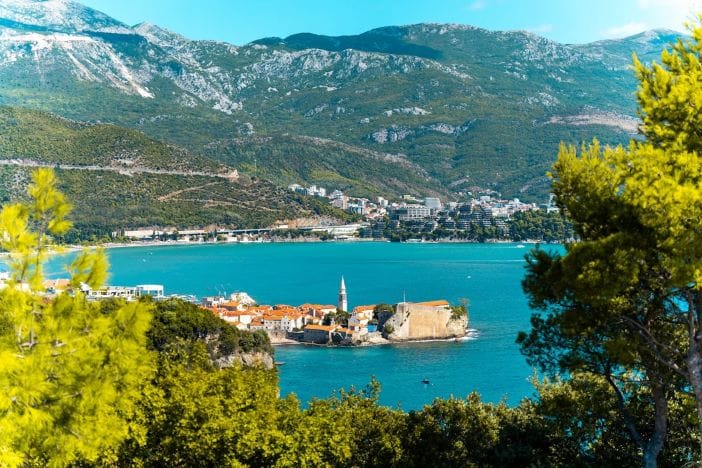
The country can offer excellent value, but the Bay of Kotor and Budva are increasingly popular. July and August accommodation rates can be dramatically different from May, June, September, or October.
Kotor
Kotor's fortified old town and surrounding mountains create one of the Adriatic's most recognizable landscapes.
Walking the old streets costs nothing, but accommodation inside or immediately around the most popular areas can command a premium.
Budva and the Coast
Budva attracts beach travelers and nightlife visitors.
For a more budget-conscious trip, compare accommodation in less famous coastal towns rather than assuming Kotor or central Budva will provide the lowest prices.
Inland Montenegro
Durmitor National Park and the northern mountains show a completely different side of the country.
Travelers interested in hiking and nature can combine coast and mountains in a relatively short trip.
Budget
Plan approximately €45–€85 per person per day, with the understanding that peak coastal travel can exceed that range.
Montenegro uses the euro, despite not being an EU member.
Best for: Couples, photographers, hikers, road trips and travelers wanting Adriatic scenery.
Money-saving strategy: Travel in late May, June, or September. In Montenegro, changing your travel month can save more than obsessively cutting small daily expenses.
10. Portugal: Not the Cheapest, but Still Strong Value in Western Europe
Portugal belongs on this list for a different reason.
It is generally not cheaper than North Macedonia, Albania, Bosnia and Herzegovina, or Bulgaria. However, for travelers specifically wanting Western Europe, Portugal can still offer strong value—particularly outside central Lisbon, central Porto, and the most popular Algarve locations.
Where to Find Better Value
Consider:
- Coimbra for history and university culture.
- Braga and Guimarães in northern Portugal.
- Évora for history and Alentejo landscapes.
- Smaller towns away from the most heavily visited coastal zones.
Lisbon and Porto remain worth visiting, but accommodation can consume a large share of a budget.
Algarve for Families
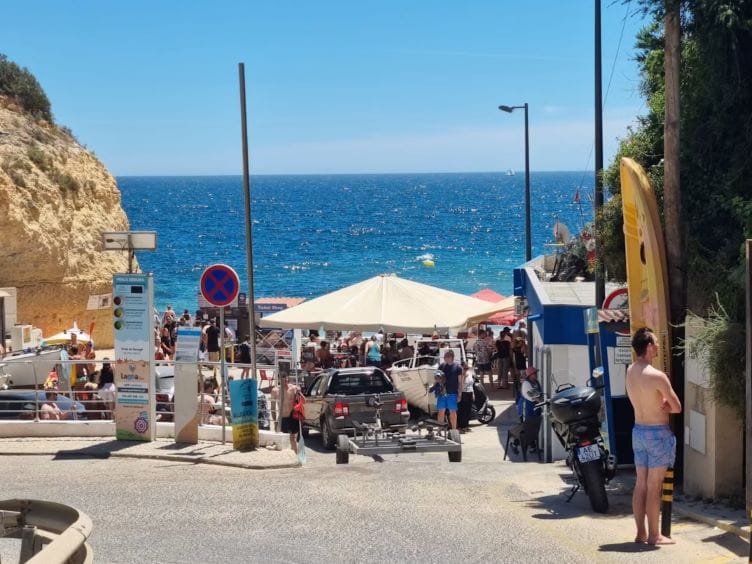
The Algarve can be surprisingly competitive for family holidays when accommodation, restaurants, and package deals are compared carefully.
A 2026 Post Office Travel Money family-holiday comparison reported strong value in the Algarve for a basket of common resort purchases. That does not mean Portugal is Europe's cheapest country overall; rather, it illustrates an important distinction between cheap resort spending and the total cost of an entire independent trip.
Budget
A broad budget-conscious planning range is approximately €55–€90 per person per day, with Lisbon and high-demand Algarve locations potentially costing more.
Best for: Families, couples, surfers, food travelers and travelers who want Western European infrastructure.
Money-saving strategy: If Lisbon accommodation looks expensive, shorten your capital stay and spend more nights in secondary cities.
Which Is the Cheapest Country to Visit in Europe?
For travelers focused primarily on low daily costs, North Macedonia, Albania, and Bosnia and Herzegovina are among the strongest choices to compare in 2026.
But the best answer changes according to your trip.
If beaches are the priority, Albania may provide the best balance of cost and experience.
For inexpensive history and food, Bosnia and Herzegovina is particularly compelling.
For families, Bulgaria and Romania offer a useful combination of affordability, accommodation choice, and diverse attractions.
For an affordable romantic trip, Albania, North Macedonia, Hungary, and Montenegro each offer different advantages.
For easy transportation and city-hopping, Poland can justify a slightly higher daily budget through better logistics.
Cheapest European Country to Visit for Couples
The cheapest European country to visit for couples is not necessarily the country with the cheapest hostel bed.
Couples typically care more about private-room prices, restaurants, scenic experiences, transportation convenience, and whether romantic activities require expensive tours.
Four destinations stand out.
Albania: Best for Affordable Coastal Romance
Combine Berat or Gjirokastër with the Albanian Riviera.
Travel in June or September rather than August for a better chance of lower accommodation prices and fewer crowds.
North Macedonia: Best for a Lakeside Escape
Ohrid provides waterfront restaurants, historic streets, churches, lake views, and boat trips in a compact destination.
It is particularly suitable for couples who prefer slow travel.
Hungary: Best for a Romantic City Break
Budapest combines architecture, Danube views, evening cruises, cafés, and thermal-bath culture.
It costs more than some Balkan destinations but can still deliver strong value compared with many famous Western European capitals.
Montenegro: Best for Dramatic Scenery
The Bay of Kotor is hard to beat visually.
The key is timing: shoulder-season Montenegro offers much better value than peak summer.
Cheapest European Countries for Families
Families should calculate costs differently from solo backpackers.
A destination with a €20 hostel is irrelevant if a family needs two hotel rooms. Instead, compare apartment availability, supermarket access, child-friendly attractions, transportation, and transfer costs.
Bulgaria works well for Black Sea holidays and city-plus-nature itineraries.
Romania is excellent for castles, medieval towns, road trips, and larger apartments.
Poland offers efficient city-to-city travel and substantial family-friendly cultural infrastructure.
Portugal may have higher daily costs, but direct flights and competitive package holidays can sometimes make the total trip surprisingly attractive.
A family should always compare the door-to-door holiday price, including baggage and airport transfers, rather than choosing a country solely from a daily-budget ranking.
How to Make a Cheap European Trip Even Cheaper
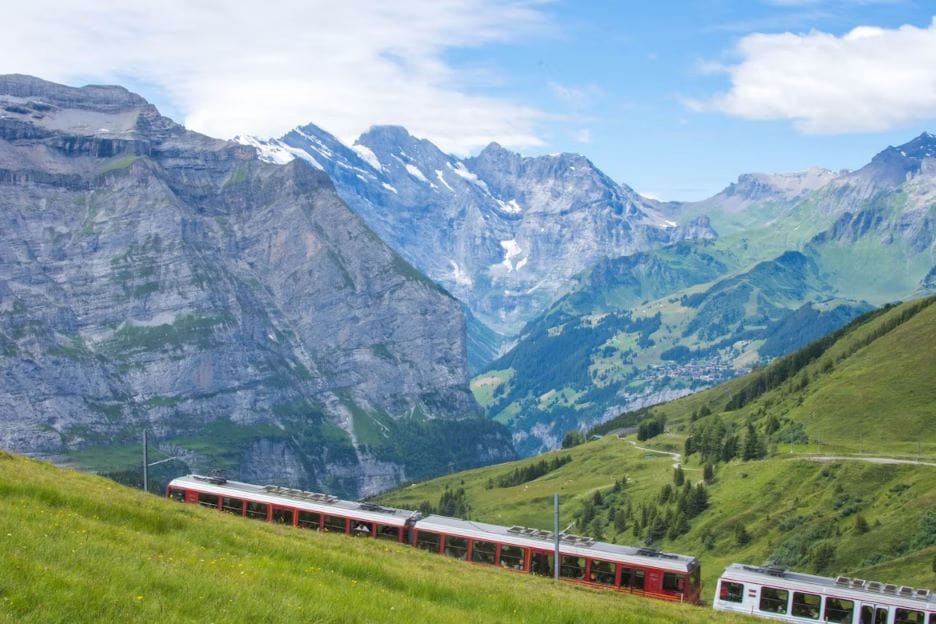
Choosing an inexpensive country is only half the strategy.
Travel in Shoulder Season
For most destinations in this guide, May, June, September, and early October can provide an excellent balance.
You may benefit from:
- Lower accommodation rates.
- Better room availability.
- Fewer crowds.
- Less pressure to pre-book every activity.
- Pleasant sightseeing temperatures.
Weather is never guaranteed, and beach destinations may have reduced services at the edges of the season.
Compare Total Flight Cost
A €40 airfare can become €130 after adding:
- Cabin baggage.
- Checked baggage.
- Seat selection.
- Airport transportation.
- Payment or booking extras.
- An overnight hotel caused by an inconvenient schedule.
Compare the final itinerary price rather than the headline fare.
Stay Near Public Transportation
The cheapest hotel is not always the cheapest place to stay.
Saving €15 per night on accommodation can be pointless if you then spend €20 per day on taxis.
Map the property before booking and check walking distance to stations, bus stops, supermarkets, and the attractions you actually plan to visit.
Eat Where Locals Eat
Restaurants directly beside major landmarks usually charge for location.
Walk several streets away and look for:
- Bakeries.
- Market halls.
- Lunch menus.
- Family-run restaurants.
- Local fast-casual food.
- Supermarkets for breakfast and snacks.
Eating economically does not mean avoiding local cuisine. In many of these countries, traditional casual food is one of the best-value parts of the trip.
Slow Down
A seven-day trip covering four countries may look exciting on paper.
It also creates repeated spending on trains, buses, luggage storage, transfers, check-ins, and last-minute meals.
For budget travel, two bases over seven days often provide better value—and a better experience—than racing through five cities.
Budget Mistakes That Make Cheap Countries Expensive
One of the biggest mistakes is assuming that an inexpensive country guarantees an inexpensive holiday.
Visiting the Most Famous Place at the Most Expensive Time
Ksamil in August, central Kotor in peak summer, and central Budapest during a major event may bear little resemblance to the "cheap Europe" prices you saw in an old blog post.
Ignoring Airport Transfers
Some low-cost airlines use airports far from the destination advertised in the route name.
Calculate the transfer cost and travel time before booking.
Exchanging Money at Poor Rates
Several affordable European countries do not use the euro.
Avoid assuming every European destination accepts euros as its normal currency. Use official exchange information, understand your card's foreign transaction fees, and decline unnecessary dynamic currency conversion when appropriate.
Booking Too Many Organized Tours
Guided experiences can be worthwhile, but booking one every day quickly eliminates the financial advantage of choosing a cheap destination.
Mix paid activities with free walking routes, markets, parks, beaches, historic neighborhoods, and independent day trips.
Currency and Border Planning for 2026
Europe is not one uniform travel zone.
Some countries in this guide are EU and Schengen members; others are neither.
Bulgaria and Romania have been full members of the Schengen Area since January 1, 2025.
Bulgaria adopted the euro on January 1, 2026, while Romania continues to use the Romanian leu. Poland and Hungary also retain their national currencies.
Albania, Serbia, Bosnia and Herzegovina, North Macedonia, and Montenegro are outside the EU. Montenegro nevertheless uses the euro.
Visa and entry requirements depend on your nationality, residence status, destination, and itinerary.
Travelers should check official government or EU sources shortly before booking rather than relying solely on blogs or social-media posts.
The EU's Entry/Exit System (EES) became operational across participating Schengen borders in 2026. ETIAS, a separate travel-authorization system for eligible visa-exempt travelers, is scheduled to begin later, with the EU advising travelers to check the official launch information rather than apply through unofficial websites prematurely.
These systems are distinct from a Schengen visa.
How to Choose the Right Cheap European Country
Instead of asking only, "Which country is cheapest?", ask what you want to do once you arrive.
Choose North Macedonia if you want a low-cost lakeside and cultural trip.
Choose Albania for beaches, mountains, road trips, and affordable couple travel.
Choose Bosnia and Herzegovina for history, food, and culturally rich city stays.
Choose Bulgaria for family holidays, Black Sea beaches, mountains, and good overall value.
Choose Serbia for nightlife, cafés, food, and urban travel.
Choose Romania for castles, medieval towns, families, and longer road trips.
Choose Poland for efficient city-hopping, museums, and history.
Choose Hungary for an affordable romantic city break centered on Budapest.
Choose Montenegro for Adriatic scenery and compact coast-and-mountain itineraries.
Choose Portugal if you want comparatively affordable Western Europe with strong tourism infrastructure.
The best-value country is the one where your preferred experiences are naturally inexpensive—not simply the destination with the lowest theoretical backpacker budget.
FAQ: Cheapest Countries to Visit in Europe
What is the cheapest country to visit in Europe in 2026?
There is no definitive cheapest country for every traveler, because airfare, season, accommodation type, and travel style vary. North Macedonia, Albania, and Bosnia and Herzegovina are among the strongest low-cost options to compare, with Bulgaria and Serbia also offering excellent value.
How much money do I need per day for budget travel in Europe?
In Europe's more affordable destinations, roughly €30–€60 per person per day can be a useful starting range for basic accommodation, inexpensive meals, local transportation, and modest sightseeing. Private hotels, nightlife, car rental, organized tours, and peak-season travel can raise the budget considerably.
What is the cheapest European country to visit for couples?
Albania and North Macedonia are particularly strong choices for budget-conscious couples. Albania combines beaches and historic towns, while Ohrid in North Macedonia offers a relatively affordable lakeside escape. Montenegro can also be excellent for couples outside peak summer.
Which cheap European country is best for families?
Bulgaria, Romania, and Poland are strong options. Bulgaria offers beaches and resorts, Romania combines castles and nature, and Poland provides efficient transportation and a wide range of cultural attractions.
Is Eastern Europe cheaper than Western Europe?
Generally, many destinations in the Balkans, Central Europe, and Eastern Europe have lower accommodation, dining, and transportation costs than major Western European destinations. However, popular capitals and coastal resorts can be expensive during peak periods.
Is Albania still cheap in 2026?
Albania can still offer excellent value, particularly inland and during shoulder season. However, highly popular coastal destinations can be substantially more expensive in July and August than older budget guides suggest.
What is the cheapest month to travel around Europe?
There is no single cheapest month for every country. November through March often brings lower accommodation prices in many cities, excluding Christmas, New Year, ski destinations, and major events. For a combination of better weather and reasonable prices, May, June, September, and October are often attractive.
Can I travel Europe for €50 a day?
Yes, in some lower-cost destinations, particularly if you stay in hostels or inexpensive guesthouses, use public transportation, eat locally, and limit paid tours. €50 per day is much harder in expensive capitals or peak-season coastal resorts.
Which affordable European countries use the euro?
Among destinations in this guide, Portugal, Montenegro, and Bulgaria use the euro. Montenegro is not an EU member but uses the euro. Currency arrangements can change, so verify official information before traveling.
Should I choose the cheapest country based on daily budget alone?
No. Calculate international flights, baggage, airport transfers, visas or travel authorizations where applicable, accommodation, local transportation, meals, and activities. A country with a slightly higher daily cost can produce a cheaper total trip if flights and transportation are much easier.
Final Thoughts
Finding the cheapest country to visit in Europe is less about discovering one universally inexpensive destination and more about matching the right country, season, and travel style.
North Macedonia and Bosnia and Herzegovina offer exceptional value for culture and slow travel. Albania combines affordability with some of Europe's most appealing coastal and mountain scenery. Bulgaria and Romania are particularly versatile for families, while Serbia provides an inexpensive urban experience. Poland and Hungary cost somewhat more but offer strong infrastructure and cultural depth. Montenegro rewards shoulder-season travelers, while Portugal remains a compelling value option for travelers who prefer Western Europe.
The biggest savings often come from when and how you travel, not from choosing the country with the lowest daily-budget estimate.
Compare total flight costs, avoid peak-season hotspots, stay longer in fewer places, use public transportation, and check current entry and currency information before booking.
Do that, and a memorable European trip in 2026 can cost considerably less than the continent's most expensive destinations might lead you to expect.